Web3

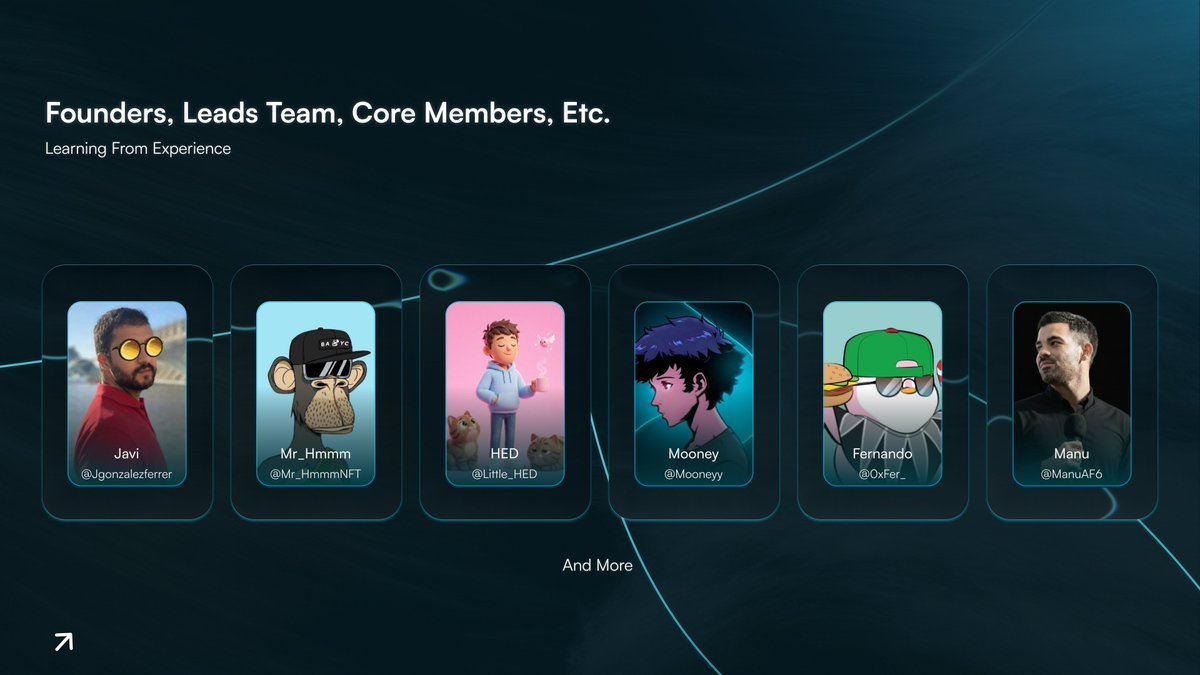
After spending several years in this space, there’s one thing that has become increasingly clear to me: The people who survive are not always the smartest, the most technical, or the most talented. More often, they’re the ones who understand how to navigate the market, build relationships, and stay resilient when results aren’t going their way. Most of these lessons didn’t come from books or courses. I learned them by observing people who have been building longer than I have; founders, operators, and leaders like
@0xFer_, NicoRodric and @KmanuS88, @Mr_HmmmNFT ( @Web3Auditing), @mooneyy , @little_HED, @jgonzalezferrer, @ManuAF6 , and many others who have remained relevant through different market cycles.
1. Relationships Are More Valuable Than You Think
Skills open doors.
Relationships keep you inside.
Most of the important opportunities I’ve seen in Web3 didn’t come from applications, résumés, or cold messages.
They came from trust built over time. In this industry, people don’t work only with those who know the most.
They work with those they know will show up when things get difficult.
There’s a phrase I’ve heard several times from more experienced founders, and one that my partner Davco and I often remember: “Make people want to work with you.” It sounds simple, even ambiguous. But over time, I realized it doesn’t mean trying to please everyone.
It means being someone people can trust. Keeping your word.
Being transparent, showing up when you’re needed, because when people trust you, opportunities start to come naturally.
2. Consistency Beats Intensity
Many people enter the market with enormous motivation.
Very few are still here a year later. I’ve noticed that the people who end up building something meaningful aren’t necessarily the fastest.
They’re the ones who keep showing up every day, even when nobody is watching.
Consistency is a competitive advantage because most people quit before seeing results. And that makes a huge difference.
3. Your Reputation Is One of Your Most Valuable Assets
Every conversation, every delivery, every collaboration, and every interaction adds to or subtracts from your reputation.
People remember who solved problems.
They remember who delivered on their promises.
And they also remember who disappeared when things got difficult.
Web3 seems huge, but in reality it’s a much smaller ecosystem than most people think. A reputation takes years to build and only minutes to damage.
4. The Best Opportunities Usually Come When You Help First
Many people enter the market asking:“What can I get?”
The people I’ve seen go the furthest tend to ask a different question:
“How can I create value?” Interestingly, those who focus on helping others usually end up creating more opportunities for themselves. Value creates attention. Attention creates relationships. Relationships create opportunities.
5. Bear Markets Reveal Who Is Actually Building
In a bull market, everyone looks like an expert. When the market drops, most people disappear.
Bear markets have something valuable: they reveal who truly has conviction. Bear markets are often the best time to build.
They are seasons for testing ideas, making mistakes, improving products, strengthening relationships, and developing capabilities.
When attention returns to the market, those who used that time wisely are usually several steps ahead.
The people who keep building when there are no immediate incentives are often the ones leading when the next wave arrives.
6. Patience Is an Advantage Few People Develop
Social media makes success look instant,But most founders and operators I respect spent years accumulating experience, relationships, credibility, and knowledge before the market started paying attention to them.
What looks like overnight success is usually the result of years of invisible work.
My Reflection....
Perhaps one of the most important lessons I’ve learned from observing people with more experience is that surviving in Web3 is not just about technology, products, or narratives. It’s about people. Building genuine relationships.
Protecting your reputation.
Creating value even when there is no immediate reward. Because many times, opportunities don’t go to the person who knows the most.
They go to the person who kept building when everyone else decided to leave. Because at the end of the day, the goal in Web3 isn’t to survive the next cycle.
The goal is to build a reputation and a network of relationships that allow you to remain present through every cycle.
Share this article
Share on LinkedIn

Cofounder & CEO
Holghar
Quick Links
